

Synopsis
Ten strangers are lured to a solitary mansion off the coast of Devon. When a storm cuts them off from the mainland, the true reason for their presence on the island becomes horribly clear.
Review
Lucy Bailey’s Witness for the Prosecution is a fantastic, five-star show, so I was intrigued to see how she had interpreted And Then There Were None, my favourite Agatha Christie and a play which – although I’ve played Vera twice – I’ve never actually seen on stage.
Unfortunately ATTWN doesn’t even come close to Witness. The adaptation draws on inspiration from the TV series, which is a shame, as I was hoping for a unique take on the beloved classic.
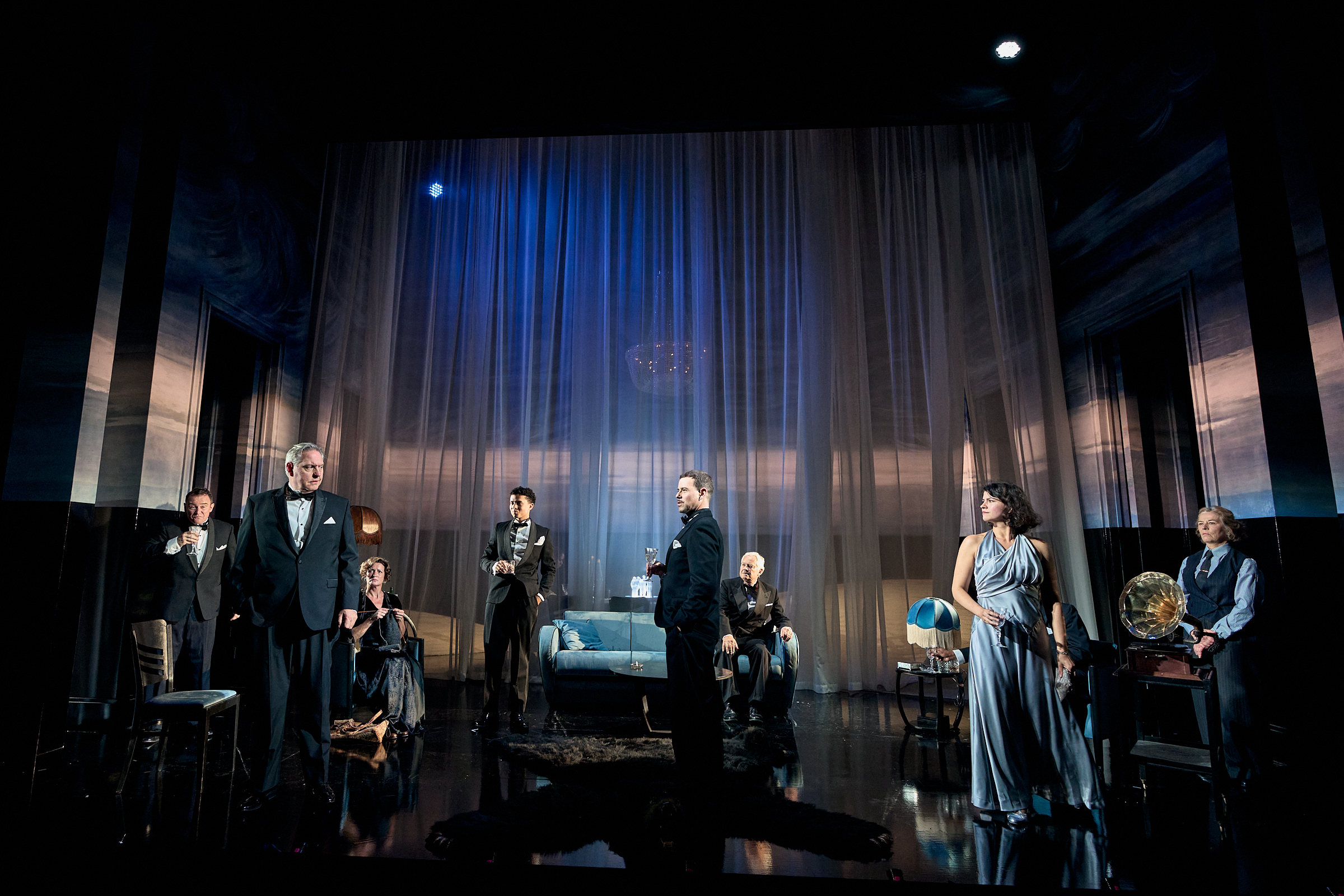
Mike Britton’s set is simple but effective, managing to depict the isolation and proximity to the sea really well; this is enhanced by Chris Davey’s lighting. The soldiers however are almost hidden at the back of the stage and are illuminated each time there is a death, which diminishes their role and detracts from the story; the same is true of the odd way in which dead characters stand and walk off stage after their demise. While I understand the rationale behind this, both choices seem like cheating in terms of dramatic staging and the impact of each death (and the twist) is lessened somewhat, although the final scene for Vera (Sophie Walter) is suitably harrowing.
Acting performances are extremely disappointing. Word emphasis, enunciation and pausing are bizarre and there is limited character development across the acts, although things start to improve in Act II, Scene ii where there are moments of excellence. Jeffery Kissoon (General Mackenzie), David Yelland (Judge Wargrave) and Bob Barrett (Doctor Armstrong) each bring a new interpretation to their characters which work well, but other actors feel like the budget version of those in the TV series. Bailey has also chosen to mix up the script so that different characters speak certain lines, with additional dialogue as well. This works fairly well and does not take away from the story, although some of the ‘jokes’ feel unnecessary and contrived; there is also a side conversation that gives away the murderer…
The flashbacks and opening scene do provide an additional layer to the story, but only a couple actually get their ‘crime’ brought to life which is a missed opportunity. However, the real issue for me is that very few characters are under suspicion which is the whole concept of the play; most of the actors do not go anywhere the victims, meaning they cannot be the killer.
Murder mystery fans will enjoy it, but sadly this production does not do justice to the brilliance that is And Then There Were None.
Thank you to ATG Tickets and Milton Keynes Theatre for my press night tickets. Opinions my own.
 Paradise is a Library